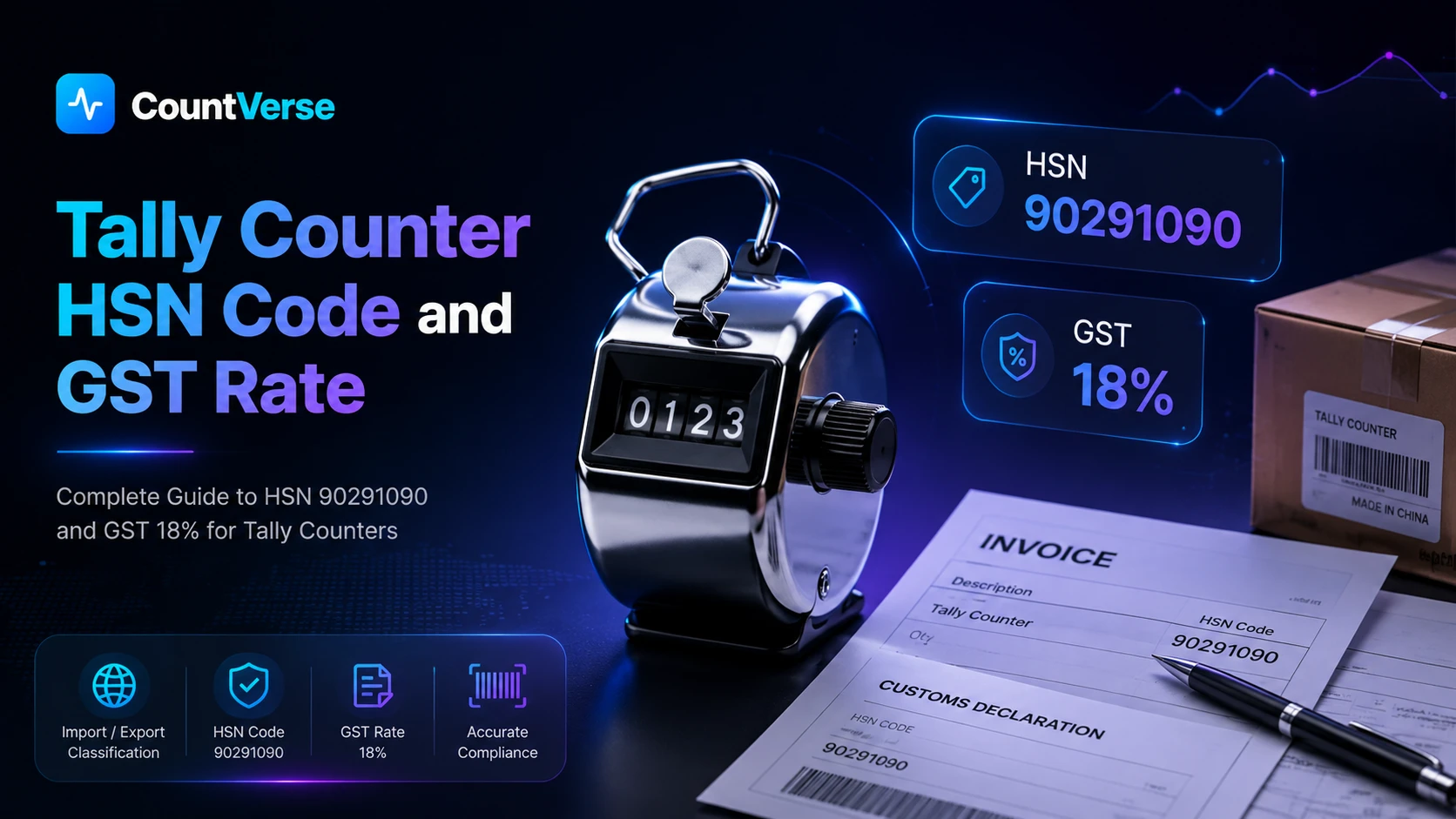
Tally Counter HSN Code & GST Rate
Count Verse Team
If you manufacture, sell, import or export tally counters, using the correct HSN code is an important part of product classification. The right code helps businesses apply the correct GST rate, prepare accurate invoices and complete customs or tax documentation without unnecessary confusion.
Every product is assigned an HSN code based on its type and purpose. Using the correct classification keeps business records accurate, supports GST compliance and reduces the chances of mistakes during import export or tax-related documentation.
If you're new to tally counters, explore the most common tally counter uses to understand where and why these devices are used across different industries.
What Is the HSN Code for a Tally Counter?
An HSN code is a standardized product classification used to identify goods for taxation and trade. Every product is assigned a specific code so it can be classified correctly during GST filing invoicing import and export activities. The same principle applies to tally counters where the correct code depends on the product category under which the item is classified.
Common HSN Code Used for Tally Counters
The HSN code used for a tally counter depends on its design and classification under the applicable tariff schedule. Hand tally counters are commonly classified under HSN Code 90291090, although the correct classification should always be confirmed according to the product specifications and the latest GST schedule. Businesses should verify the latest GST notifications or customs classification before using an HSN code on invoices or shipping documents as product classifications may change over time.
Why the Correct HSN Code Matters
Using the correct HSN code keeps business records consistent and reduces the chances of mistakes during tax filing or customs clearance. It also makes product identification clearer for suppliers, buyers and government authorities when documents are reviewed.
Want to see how a tally counter works in practice? Try our free online tally counter and start counting instantly from any device.
GST Rate on Tally Counters
The GST rate for tally counters generally falls under the applicable HSN classification and is commonly 18% for products classified under HSN Code 90291090. Since tax rates are linked to product classification, selecting the correct HSN code is just as important as applying the correct GST rate on invoices and business records.
Standard GST Rate
Tally counters classified under HSN Code 90291090 are generally subject to an 18% GST rate. Before issuing invoices or filing GST returns, it is still good practice to verify the latest GST notifications as tax rules and product classifications may be updated over time.
If you regularly use tally counters for business or daily tasks, download our tally counter app for faster and more convenient counting.
When GST Classification Can Change
A tally counter may fall under a different classification if its design function or product category changes. For that reason businesses should classify the product according to its actual specifications instead of relying on a similar item's HSN code.
How Tally Counters Are Classified for Trade
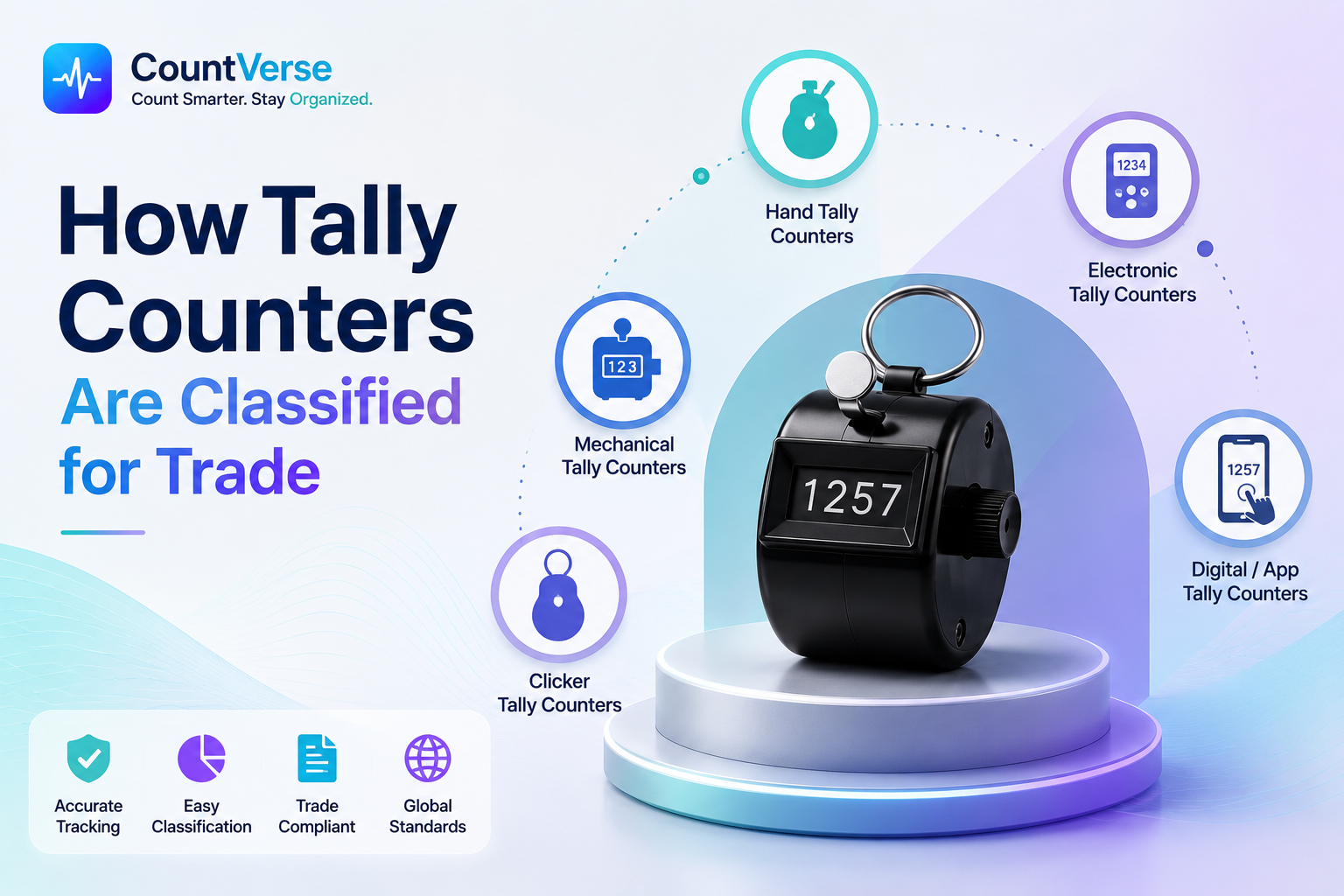
Product classification is based on the actual nature of the item rather than its name alone. Before assigning an HSN code factors such as the product's design function and intended use are considered to ensure it is placed in the correct category.
Product Description
A clear product description gives customs and tax authorities the information needed to classify the product correctly. Details such as whether the tally counter is mechanical or electronic along with its intended use make it easier to assign the appropriate HSN code during documentation.
Import and Export Classification
The same product may appear in import and export records under the applicable tariff classification used by customs authorities. Keeping product descriptions consistent across invoices and shipping documents makes customs processing smoother and reduces the chance of unnecessary queries.
Tally Counter Trade Overview
Tally counters are supplied through domestic distributors as well as international trade channels. Because they are used across different industries, accurate product classification plays an important role in buying, selling, customs clearance and business documentation.
Common Importing Countries
Demand for tally counters exists in many countries where industrial equipment, office supplies and measuring devices are imported regularly. Import records can vary over time as business demand and trade activity change.
Major Exporting Countries
Several manufacturing countries supply tally counters to distributors and wholesalers around the world. Export volumes usually depend on production capacity, pricing and international demand.
Industries That Use Tally Counters
Tally counters are supplied to businesses involved in manufacturing, warehousing, retail, sports, education and event management. Their wide range of commercial applications is one of the reasons they continue to appear in international trade records.
Businesses also use tally counters for attendance tracking, inventory management, events, and many other tally counter uses across different industries.
HSN Code vs HS Code: What's the Difference?
The terms HSN Code and HS Code are often used together but they are not always used for the same purpose. Both follow the same product classification system although their application depends on whether the product is being sold within India or traded internationally.
HSN Code | HS Code |
Used for GST classification in India | Used for international import and export |
Mainly appears on tax invoices and GST documents | Used in customs declarations and trade documents |
Supports domestic tax reporting | Supports global product classification |
Using the correct code for the right purpose keeps business records consistent and reduces confusion during tax filing or customs documentation.
Common Mistakes While Choosing an HSN Code
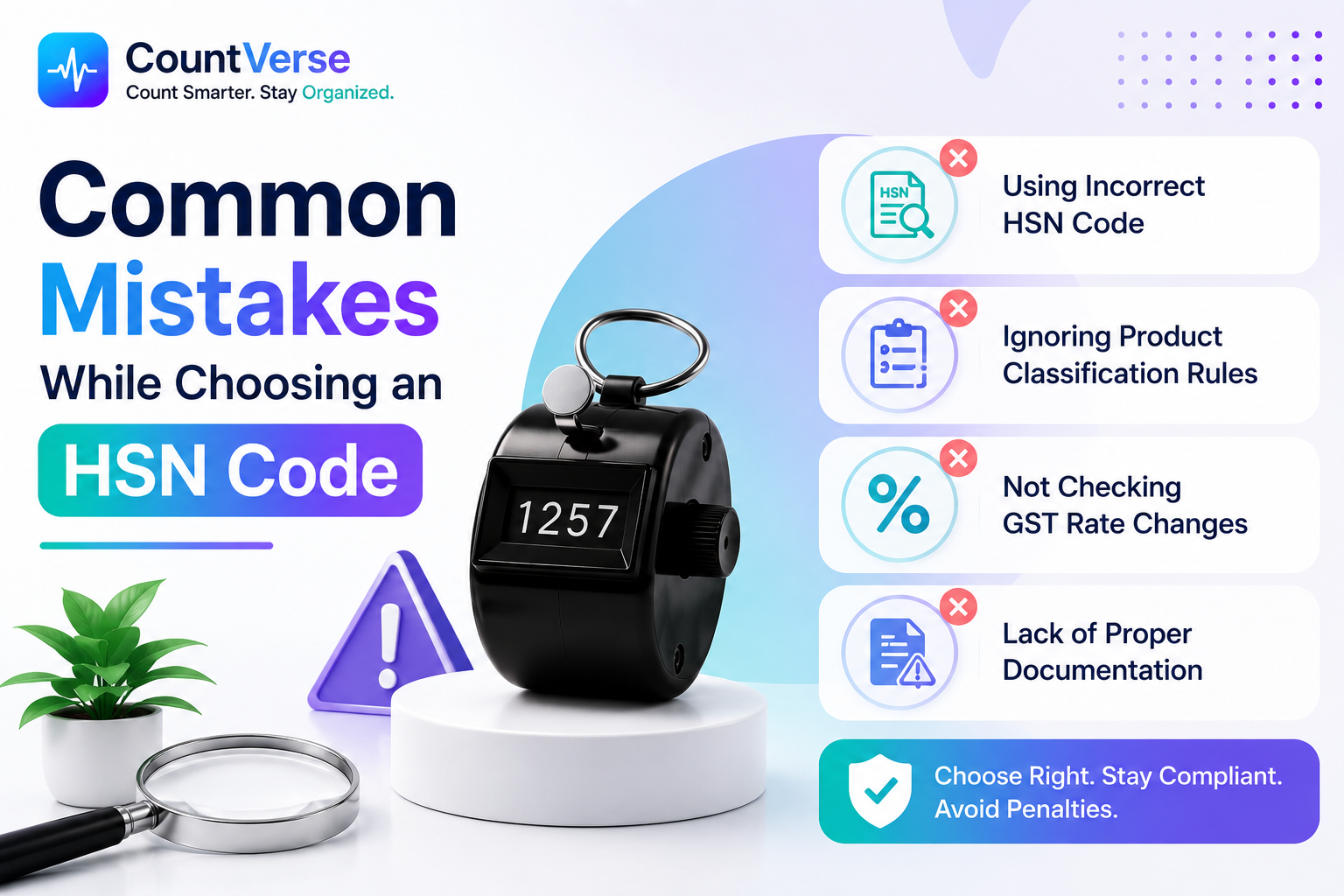
Choosing an HSN code without checking the product details can create unnecessary issues later. A little attention during classification makes invoicing, GST filing and trade documentation much more accurate.
Using a Similar Product Code
Products that look alike do not always fall under the same HSN code. Selecting a code based only on appearance instead of the actual product classification can lead to incorrect documentation.
Ignoring Product Specifications
The design, function, and purpose of a product all play a role in its classification. Reviewing these details before assigning an HSN code makes the selection more reliable.
Not Checking the Latest GST Updates
HSN classifications and GST rules may change over time. Referring to the latest official notifications before preparing invoices or tax documents helps keep business records up to date.
Frequently Asked Questions
What is the HSN code for counters?
The HSN code for a counter depends on its product category and technical classification. Before using any code it should always be matched with the product specifications and the latest GST schedule.
What is the HSN code for a tally counter?
The HSN code for a tally counter is assigned according to its classification under the applicable tariff system. Businesses should confirm the correct code before preparing invoices, GST returns or customs documents.
What is the GST rate on a tally counter?
The GST rate is linked to the HSN code used for the product. Checking the latest GST notifications before applying a tax rate helps keep business records accurate.
Is the HSN code the same as the HS code?
Not exactly. An HSN code is mainly used for GST classification in India while an HS code is used for international trade and customs documentation.
Why is the correct HSN code important?
The correct HSN code supports accurate tax filing product classification and trade documentation. It also reduces the chances of delays or errors during business transactions.
Final Thoughts
Using the correct HSN code for a tally counter is more than a tax requirement. It plays an important role in product classification, GST compliance and trade documentation. A small mistake at this stage can create unnecessary problems later especially when preparing invoices or handling import and export records.
Before using any HSN code or GST rate it is always worth checking the latest official classification to make sure the information is still valid. Keeping product details accurate from the beginning makes business transactions smoother and reduces the chances of unnecessary tax or documentation issues.